
What Another Season of Neglect Actually Costs You
A garage door typically weighs 150 to 400 pounds. When the safety systems that control it are worn, skipped, or disabled, that weight becomes a hazard sitting directly over the spot where kids ride bikes, pets nap in the shade, and grocery bags get set down for a second. Waiting until something breaks means waiting until a child's hand, a pet's tail, or someone's foot is in the wrong place at the wrong time. The fixes here are inexpensive compared to an ER visit or a dead pet, and most take less than an hour.
How These Doors Actually Hurt Kids and Pets
The injuries aren't freak accidents. They follow predictable patterns:
Pinch points on the panels
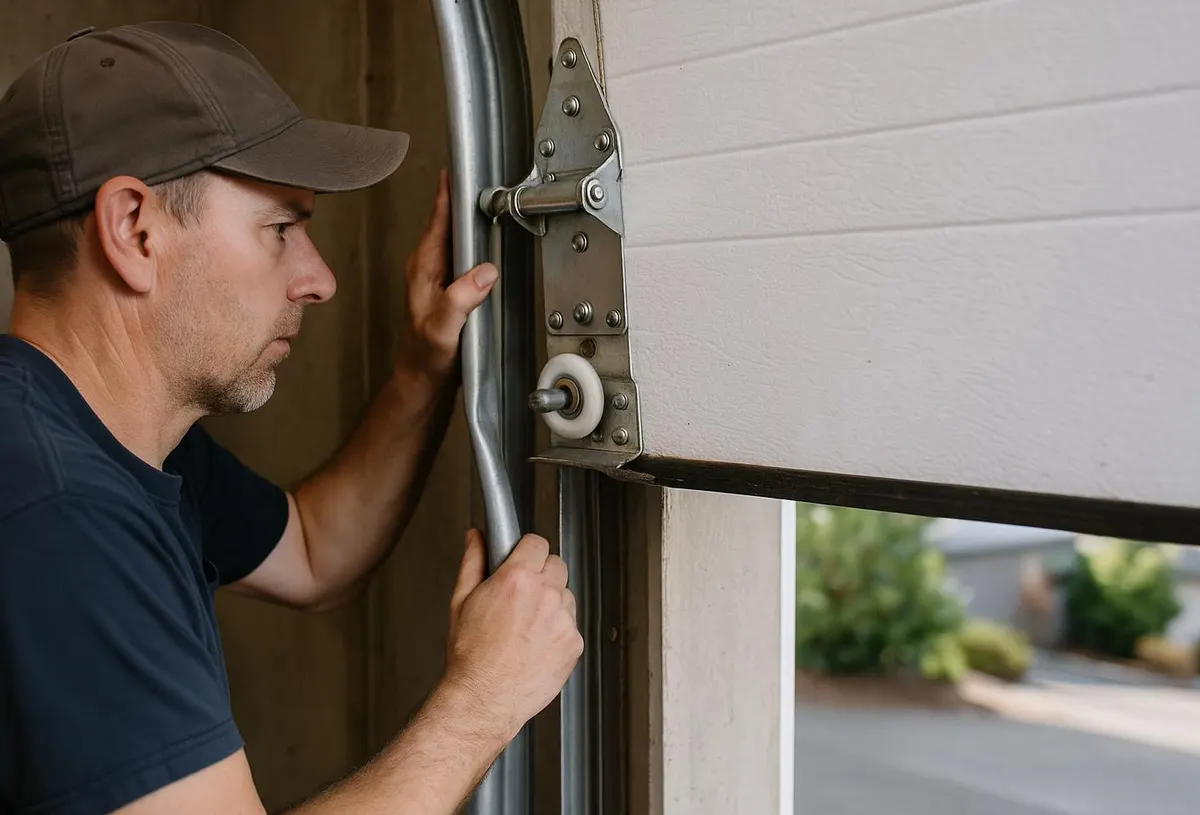
Older doors, and doors that have been resurfaced or had panels replaced over the years, often have gaps between sections that close under force as the door travels. Small fingers exploring the door while it's moving, or while it's resting closed, can get caught in these seams.
Auto-reverse sensors that don't actually work
Every opener made in the last few decades is required to have photo-eye sensors near the floor that stop and reverse the door if the beam is broken. Dust kicked up during dry months, spider webs, or a sensor knocked slightly out of alignment during a wind event can all cause the beam to stop working without anyone noticing — until the door closes on something it shouldn't.
Springs that fail without warning
A broken torsion or extension spring doesn't just mean the door won't open. If it fails while the door is up, or while someone manually releases the opener to move the door, an unsupported door can drop fast. Pets sleeping in the garage and kids darting underneath are the ones at risk.
Remotes and openers within reach
Wall-mounted buttons at kid height, garage remotes left in unlocked cars, and universal codes that were never changed after a move-in all give children the ability to trigger a moving door with no adult present.
The Specific Actions That Prevent Injury
- Test the auto-reverse function monthly. Place a 2x4 flat on the ground where the door closes. If the door doesn't reverse on contact, stop using it until it's repaired.
- Check the photo-eye sensors. Wipe the lenses clean — dust and wildfire smoke residue common in dry East Contra Costa summers settle on these more than people expect — and confirm both lights are solid, not blinking.
- Move the wall control out of reach of small children, and keep garage remotes off keychains and out of unattended cars.
- Never let kids or pets play near a moving door, and treat the area under a raised door as off-limits storage space, not a hangout spot.
- Inspect panels for gaps or pinch points during your seasonal check, especially on doors that have had panel replacements after storm or impact damage.
- Have springs inspected if the door feels heavy, uneven, or noisy when moving — that's the system telling you it's close to failing, not something to ride out through another season.
- Confirm the manual release handle works so the door can be safely disengaged in an emergency without it dropping suddenly.
Heading into the rainy season, tracks and rollers also pick up grit and moisture that make doors stick, jerk, or reverse unpredictably — another reason a pre-winter check matters, not just a spring one.
When to Call Antioch Garage Door
If your sensors won't align, the door reverses inconsistently, or you've noticed gaps between panels, that's not a DIY afternoon — it's a safety repair. Our Garage Door Tune-Up & Maintenance service covers sensor alignment, spring tension checks, and panel inspection in one visit, and our Garage Door Spring Repair team handles failing springs before they drop a door on something that matters. Both are quick visits that remove the guesswork.
If you're in Antioch, Oakley, Brentwood, Pittsburg, Bay Point, Concord, Discovery Bay, or Martinez and it's been a while since anyone checked your door's safety systems, call Antioch Garage Door this week — before the rain starts and the door gets used even more.